Carpal Tunnel Syndrome
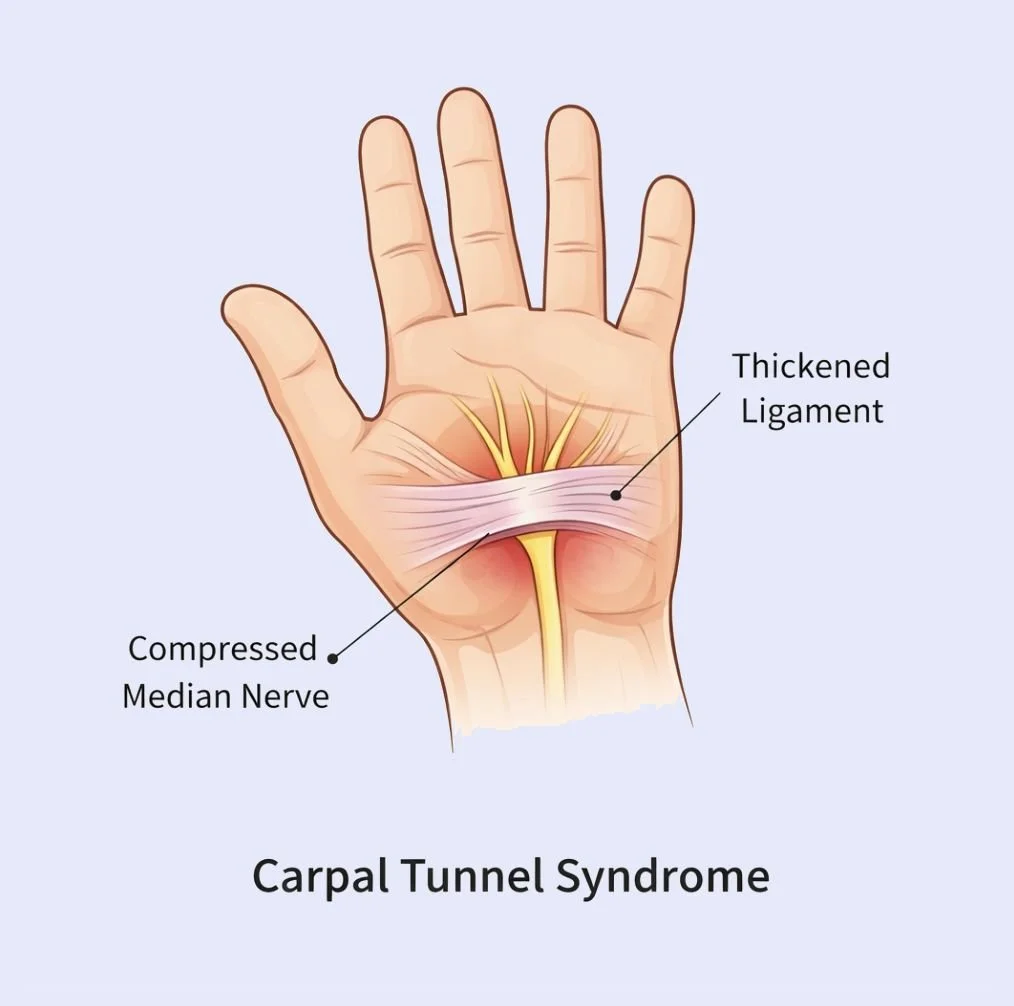
Carpal tunnel syndrome occurs when the ligament overlying the carpal tunnel becomes thickened, leading to compression of the median nerve as it passes through the wrist. This nerve compression can result in tingling, numbness, or loss of sensation affecting the thumb, index, middle, and part of the ring finger. Patients commonly experience pain, hand weakness, and nocturnal symptoms that may wake them from sleep, often relieved by shaking or moving the hand. In more advanced cases, prolonged nerve compression can lead to weakness and wasting of the thumb muscles (thenar muscle atrophy).
Mild symptoms can often be managed with activity modification, wrist splinting, and hand therapy. However, persistent or progressive symptoms may require surgical treatment to relieve pressure on the nerve.
Dr Simon Ho offers open carpal tunnel release for appropriately selected patients. This procedure involves dividing the thickened ligament to decompress the median nerve and improve symptoms.
Prior to considering surgery, a nerve conduction study is required to confirm the diagnosis and assess severity, helping guide the most appropriate treatment approach.
If you are experiencing ongoing hand numbness, weakness, or night-time symptoms suggestive of carpal tunnel syndrome, consultation with your GP or specialist can help determine the most suitable management.